Tech: 5 Stories from this week
A different take on Tech in 5 mins, 1139 words.

5 stories you couldn’t possibly miss…
🦾 From choreography to competence: LBM-powered Atlas generalizes fast!
✧ Atlas, Boston Dynamics’ dancing humanoid, can now use a single model for walking and grasping, it’s an significant step toward general-purpose robot algorithms. Boston Dynamics and Toyota Research Institute trained Atlas with a single Large Behavior Model (LBM), an end-to-end, language-conditioned policy that fuses vision, proprioception, and text prompts so it can execute long, continuous manipulation-plus-locomotion sequences instead of brittle, hand-coded scripts. The approach is fed by human demos, teleop, sim, and video, enabling Atlas to generalize skills across setups.
✧ LBMs and language-conditioned policies promise faster skill acquisition (fewer demos), less custom engineering, and better generalization for long-horizon manipulation, precisely what real jobs demand. That shifts robots from preprogrammed stunts to adaptable workers that can follow high-level instructions and recover when plans change. If these models scale and benchmark well, they could compress the timeline to deploy useful humanoids on factory floors and beyond. — If nothing else watch the video, it is truly remarkable!
🚘 Design dupes, software truth: China’s EVs move the goalposts.
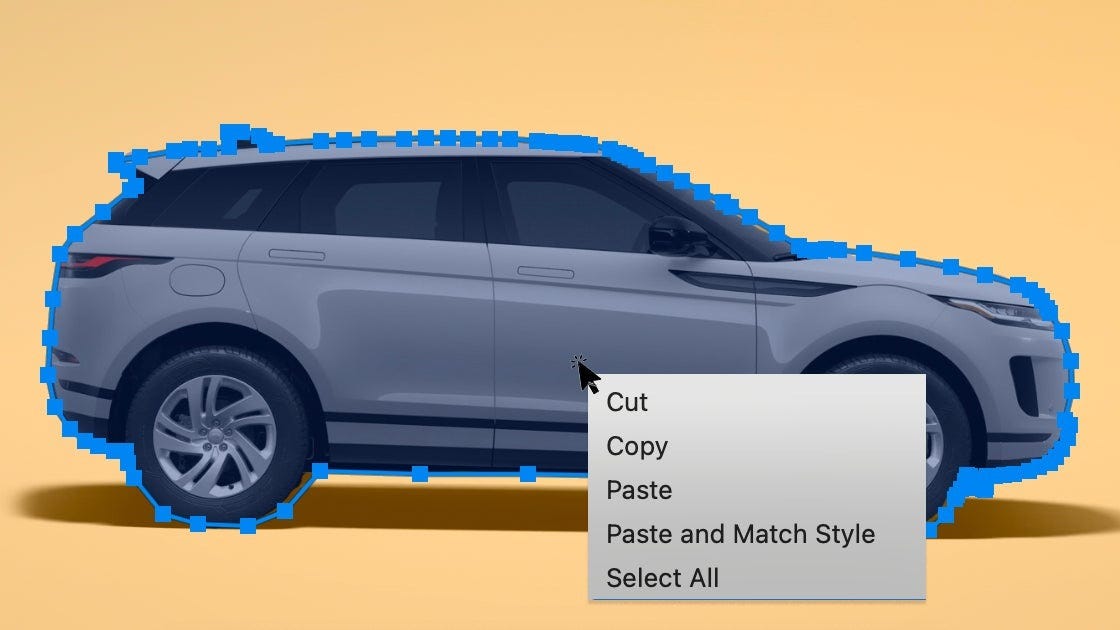
✧ Chinese automakers are selling EVs that closely resemble Western luxury models—think Jaecoo’s J7 mirroring Range Rover cues—with sparse legal pushback and strong consumer uptake; brands like Chery, Xiaomi, and Zeekr are leveraging familiar aesthetics to win buyers at lower price points. As they expand abroad, rising criticism may force a shift from copycat styling to more original design. The piece frames it as a deliberate play: imitate to scale, then evolve.
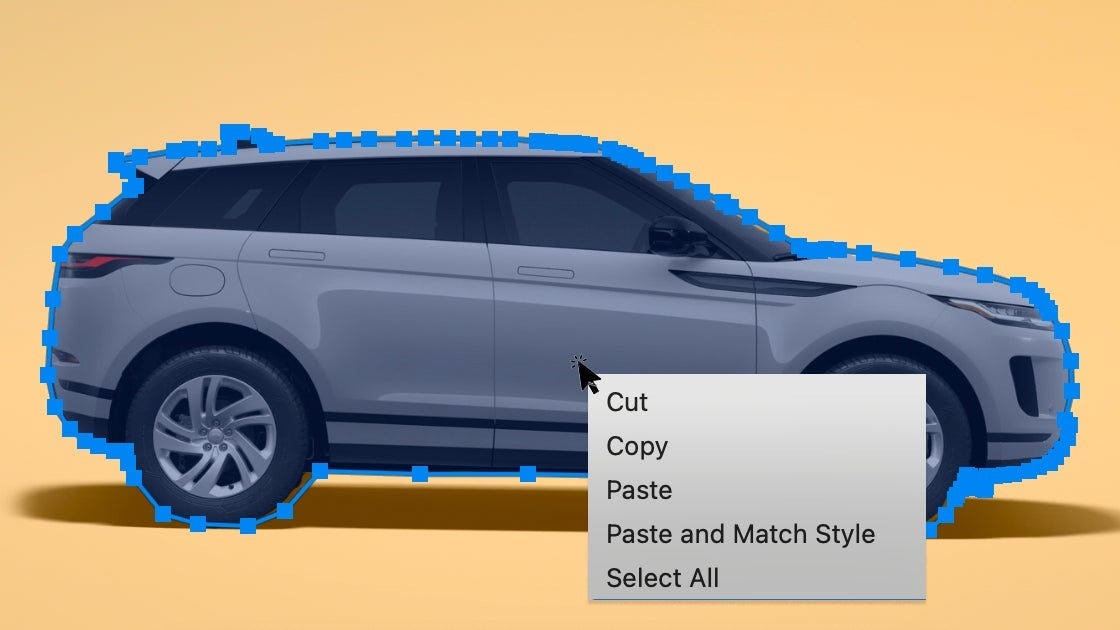
Picture form the Article ✧ When everyone can manufacture a “luxury look,” the basis of competition moves to software, charging ecosystems, OTA updates, ADAS quality, and total cost of ownership—exactly Christensen’s innovator’s dilemma. Consumers, not legacy badges, are resetting the performance yardstick: entry-level EVs now “drive good” and offer serious value, pressuring incumbents’ prestige narratives. Expect fast followers to climb upmarket as design commoditizes and buyers index on usability, connectivity, and price—not heritage.
🔎 Google beats the axe, keeps Chrome — but must curb default deals and share search data.
✧ A federal judge found Google’s search business is an illegal monopoly but rejected a $2.5T-style breakup, letting it keep Chrome and Android and continue default-search payments like Apple’s deal, while ordering no exclusive default contracts and data sharing from Google’s index to rivals. Alphabet’s stock jumped as the court opted for conduct remedies over divestitures.
✧ It’s a clear win for Google—no forced sales, status quo largely intact—yet the ruling also spells out years of anti-competitive tactics, including paying partners over $26B to secure defaults. For consumers, the ban on exclusives and mandated data access could mean more choice and fresher competitors in search without breaking familiar products. Expect appeals and ongoing scrutiny, but near-term the ruling favors continuity with a nudge toward competition hence Wall Street’s cheer and watchdogs’ “slap on the wrist” critiques.
🤖 I put my AI doppelgänger to work — it wasn’t me.
✧ James O'Donnell, MIT Technology Review, tests a personal “AI double” to take on parts of a reporter’s job; the clone stitches together tools that mimic style and persona, but the results were underwhelming and needed hand-holding. Digital “doppelgängers” aim to replicate an individual’s writing/decision habits, not just face or voice, but today’s clones still miss nuance and judgment.
AI Doppelgängers haven’t quite materialized…yet ✧ Clones may help with routine drafting or role-play tasks, yet they’re far from replacing human editorial sense; productivity evidence shows AI shines on bounded writing/coding tasks, not whole jobs. Expect fresh debates over consent and identity as AI copies spread into workplaces—tools, not twin—for now.
🔋 Stretchy “power band” turns body heat into electricity.
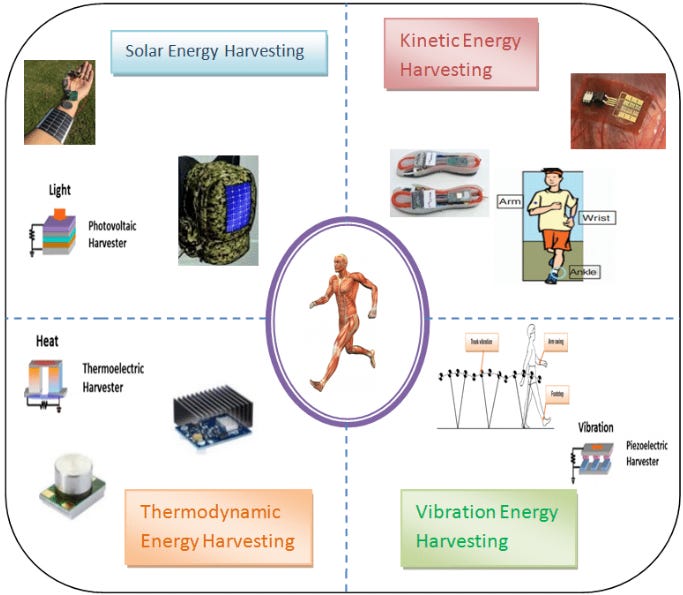
✧ Researchers at Peking University built the first elastic thermoelectric “rubber band” that keeps generating power even while stretched; promising continuous trickle-charging for wearables, smart garments, and medical sensors; the work appears in Nature. The material blends semiconducting polymers with rubber to exploit the skin-to-air temperature gap, aiming to replace bulky batteries with always-on energy harvesters.
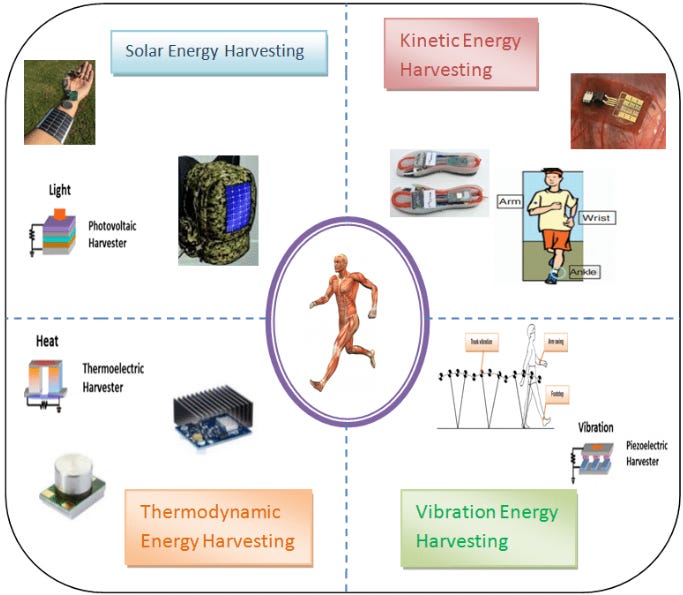
Energy harvesting by human body environment ✧ Body-energy harvesting is a key unlock for less invasive, always-on devices—wearable TEGs can supply continuous power from body heat, a priority for health tech that can’t afford dead batteries (think pacemakers and long-term monitors). We recently saw a battery-free intracardiac pacemaker powered by heart motion worked in large-animal tests, and flexible TEGs have already run Bluetooth sensors with only a ~4 K skin-ambient difference. Expect smarter wearables and soft implants to lean on hybrid harvesters (heat + motion + biochemistry) so devices last longer, shrink further, and fade into clothing or skin.
🔭 Other horizons and weekend long reads:
🍸 Shaken, not stirred: ten-martini math finally explains the quantum butterfly!
✧ The piece traces the decades-long quest behind the Hofstadter butterfly, a fractal map of electron energies in a magnetic field predicted in 1974, went from curiosity to clarity, with experiments in graphene confirming the pattern and new number-theory tools tying it all together. A famed “Ten Martini” challenge spurred partial, patchwork proofs; the latest work unifies why those intricate gaps appear and extends to more realistic settings. In plain terms: mathematicians finally showed why the butterfly looks like a butterfly and why nature makes it that way.

✧ From bold guess and failed starts to elegant proof, the story ties math to measurable physics. You’ll meet the characters, see the ideas, and understand how persistence (and a better framework) turned a pretty picture into a real phenomenon. Come for the lore, stay for the “aha” that number theory can illuminate the quantum world. It’s a crisp tour from number theory to quantum mechanics—with martinis, calculators, and all.
🇺🇸 America’s ‘other Hindenburg’: how the USS Akron’s fall ended the airship dream.
✧ This weekend revisit the U.S. Navy’s ambitious airship era. Embodied by the USS Akron, a helium-filled “Queen of the Skies” vessel built to scout oceans, whose 1933 storm crash (and a doomed rescue blimp) made it the deadliest aviation disaster of its time. The loss wiped out top leadership, including “air admiral” William Moffett, and triggered inquiries that questioned whether to continue or quit the dirigible program. Within two years the sister ship Macon also went down, and the Navy conceded the “twilight of the Zeppelins.”

Picture from the piece ✧ It’s a gripping tale of progress through hard lessons: civic pride, bold engineering, and tragic failure colliding in a single chapter of aviation history. The piece shows how catastrophe can erase institutional knowledge and reset national ambition—debates over learning versus abandoning echo today’s frontier tech cycles. It’s narrative history that doubles as a meditation on why exploration persists despite risk.